Tapas Tripura
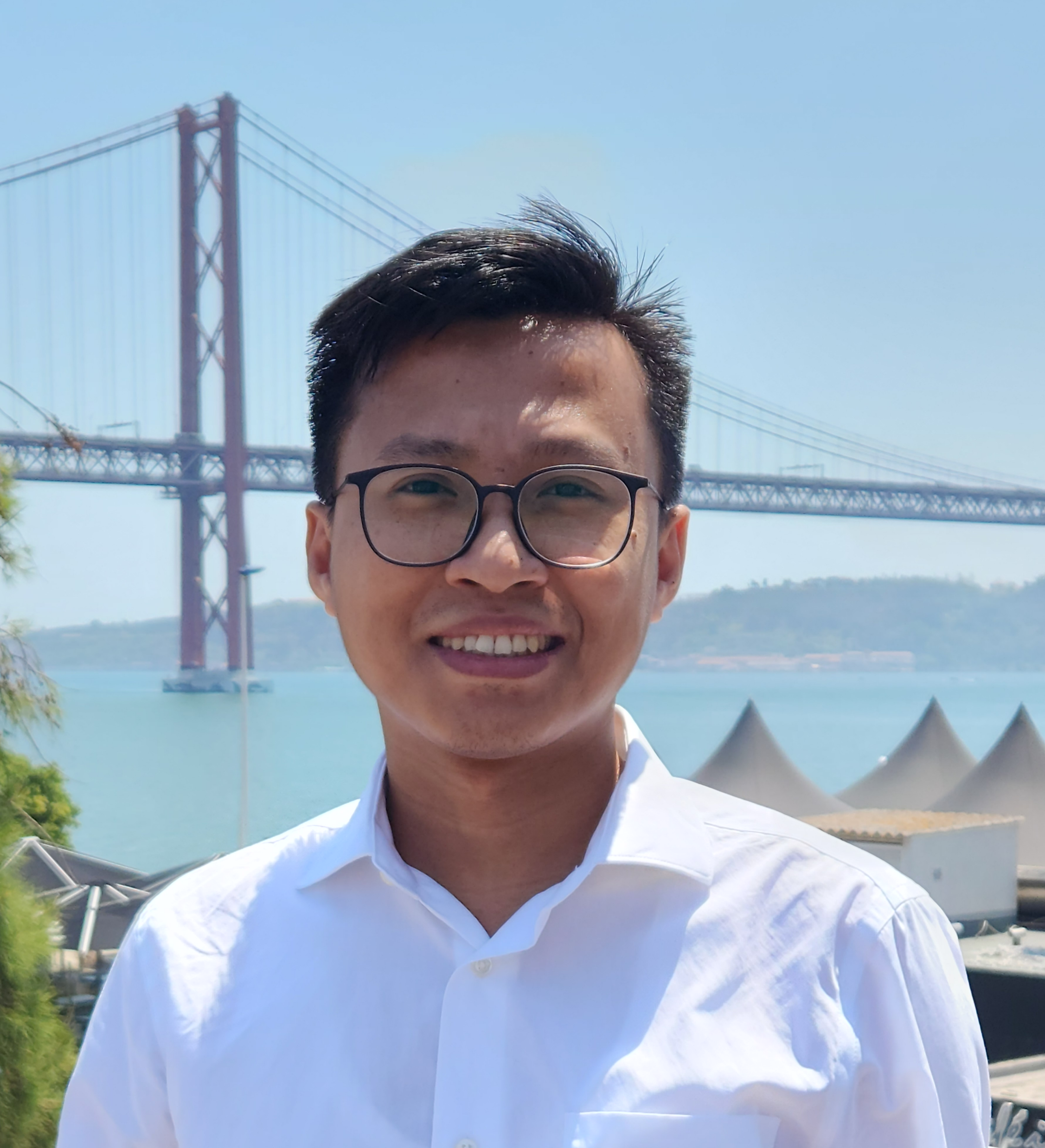
I am a postdoctoral associate in the Sibley School of Mechanical and Aerospace Engineering at Cornell University. I work on scientific machine learning, with applications to neural operator surrogates, agentic AI, and reinforcement learning-based control. My research sits at the intersection of physics, computation, and artificial intelligence: data-driven discovery of physical systems, operator learning, scientific foundation modeling, and intelligent control of mechanical systems.
Before Cornell, I completed my Ph.D. in Applied Mechanics at IIT Delhi, where I was affiliated with the Center for Scientific Computing and Computational Mechanics and was a Prime Minister’s Research Fellow (PMRF), awarded by the Ministry of Education, Government of India. I received my M.Tech. in Structural Engineering from IIT Guwahati and my B.Tech. in Civil Engineering from NERIST.
My work includes the Wavelet Neural Operator (WNO), a Lagrangian discovery framework that uncovers governing equations directly from data, and the scientific foundation model Neural Combinatorial Wavelet Neural Operator (NCWNO). More broadly, I build machine-learning methods that discover the physics of dynamical systems from data, learn solution operators of PDEs, and control mechanical systems with reinforcement learning.
Selected frameworks
Architectures and workflows from my papers.
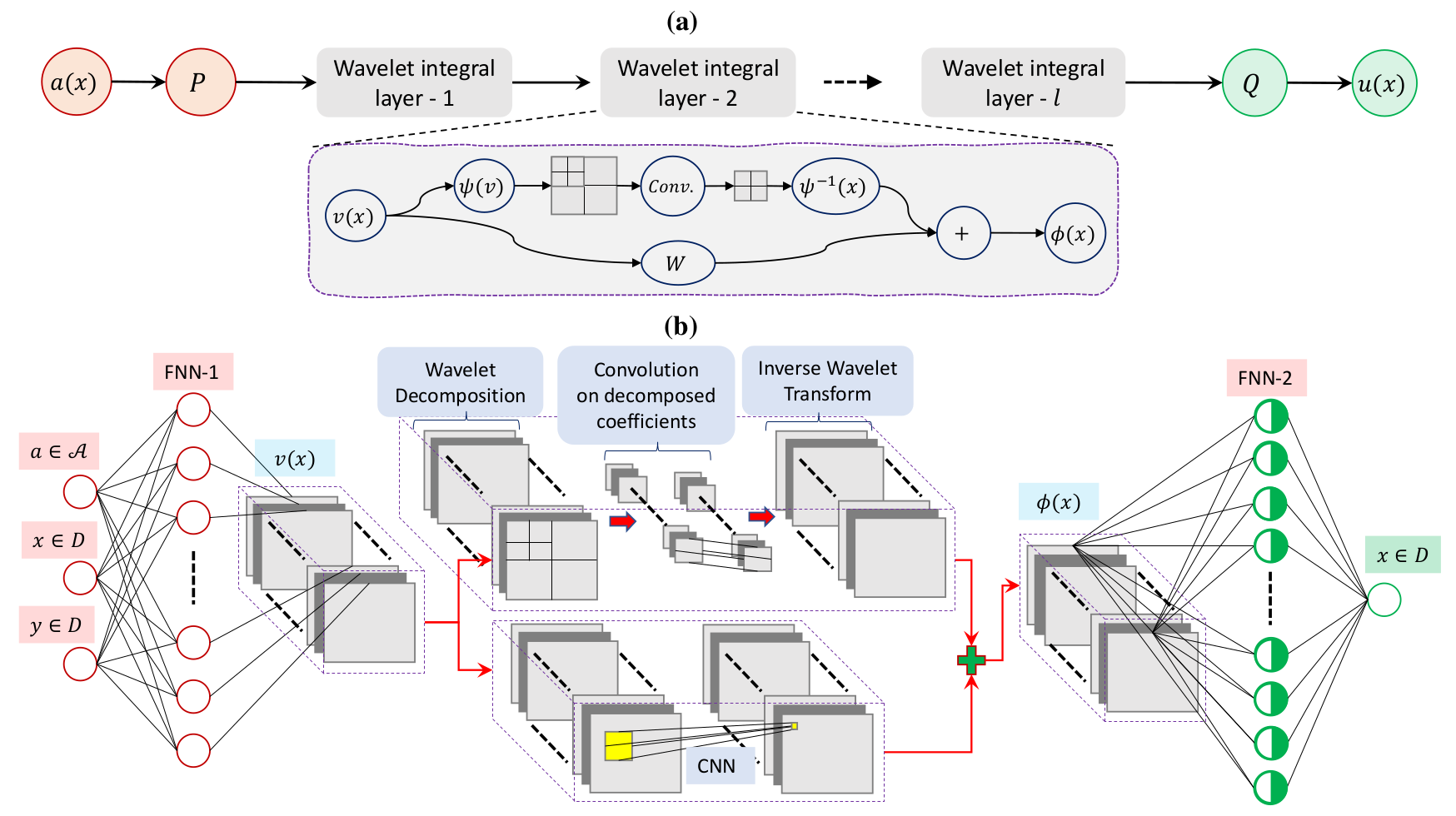
Wavelet Neural Operator (WNO)
Wavelet integral layers learn the solution operator of parametric PDEs, with features localized in both space and frequency.
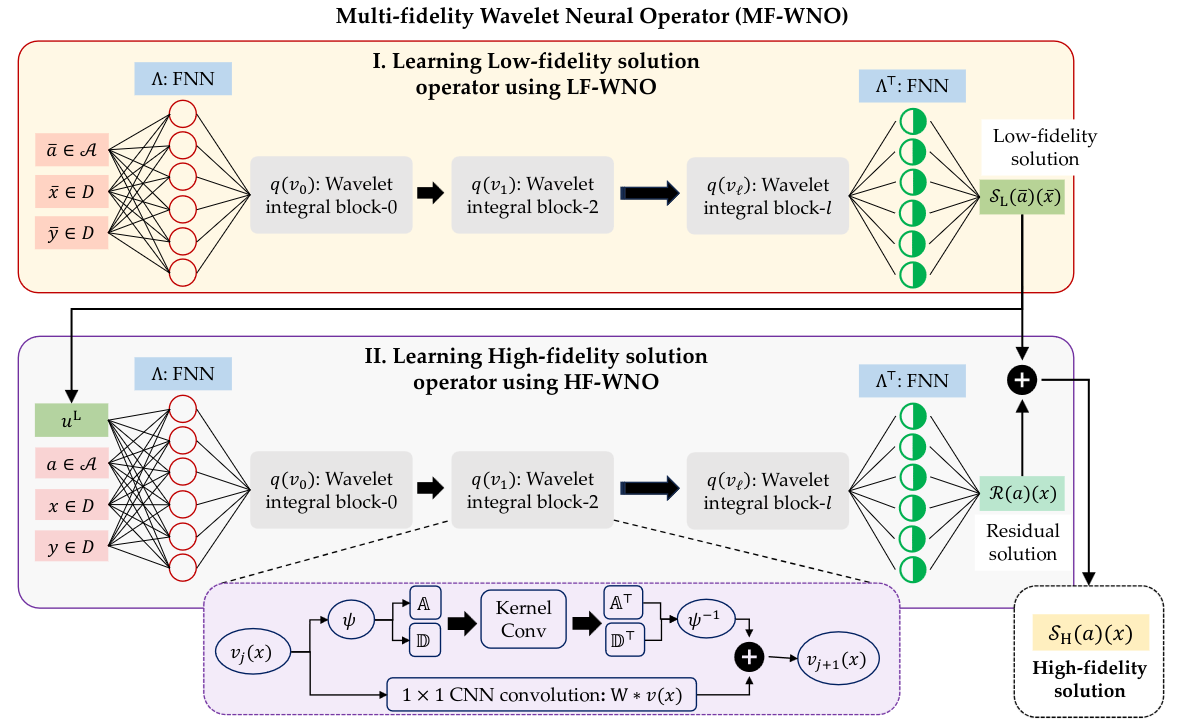
Multi-fidelity WNO
A low-fidelity wavelet operator is corrected by a high-fidelity residual operator, for fast reliability analysis.
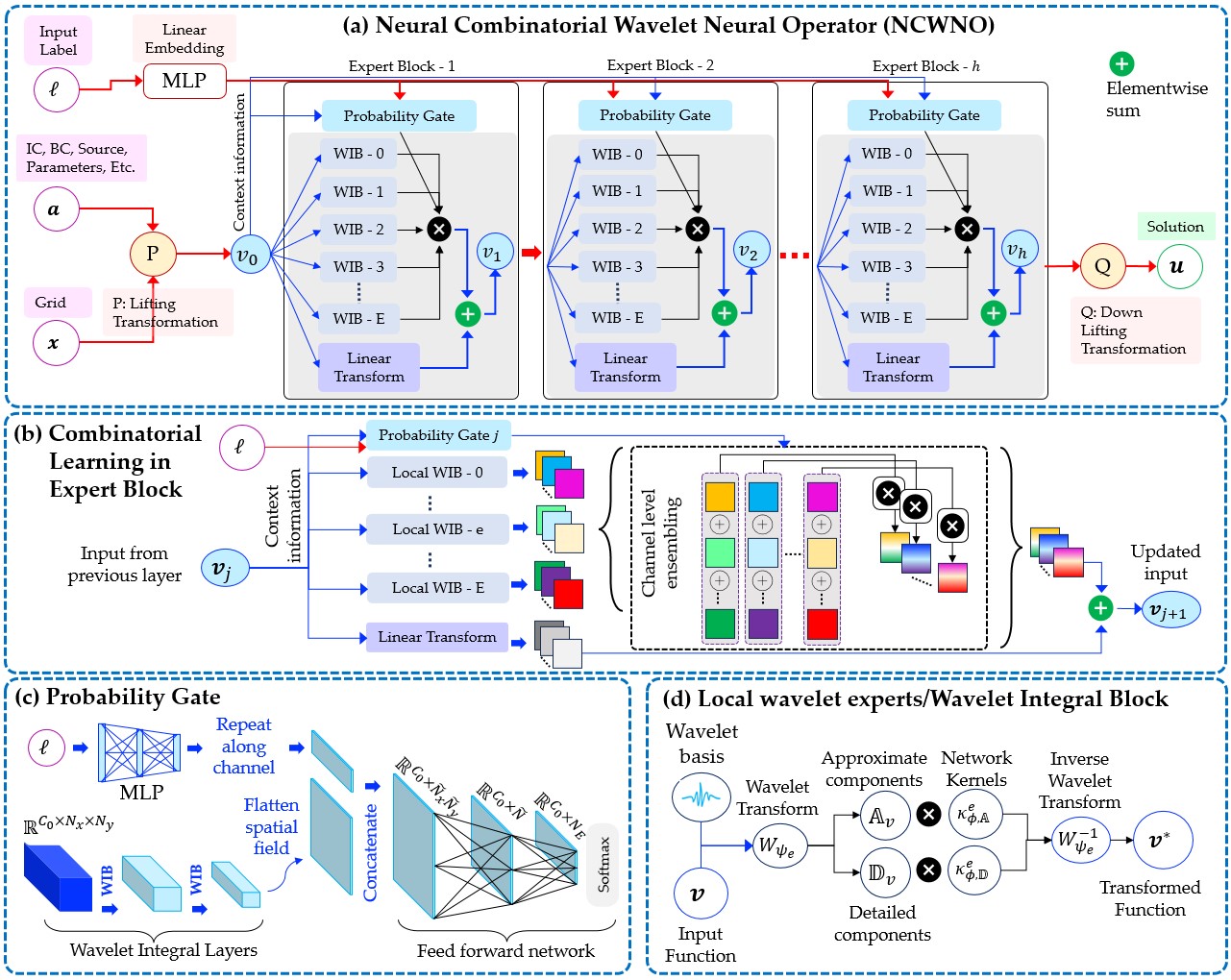
Scientific foundation model (NCWNO)
Expert wavelet blocks selected by a probability gate let one model learn many PDEs without catastrophic forgetting.
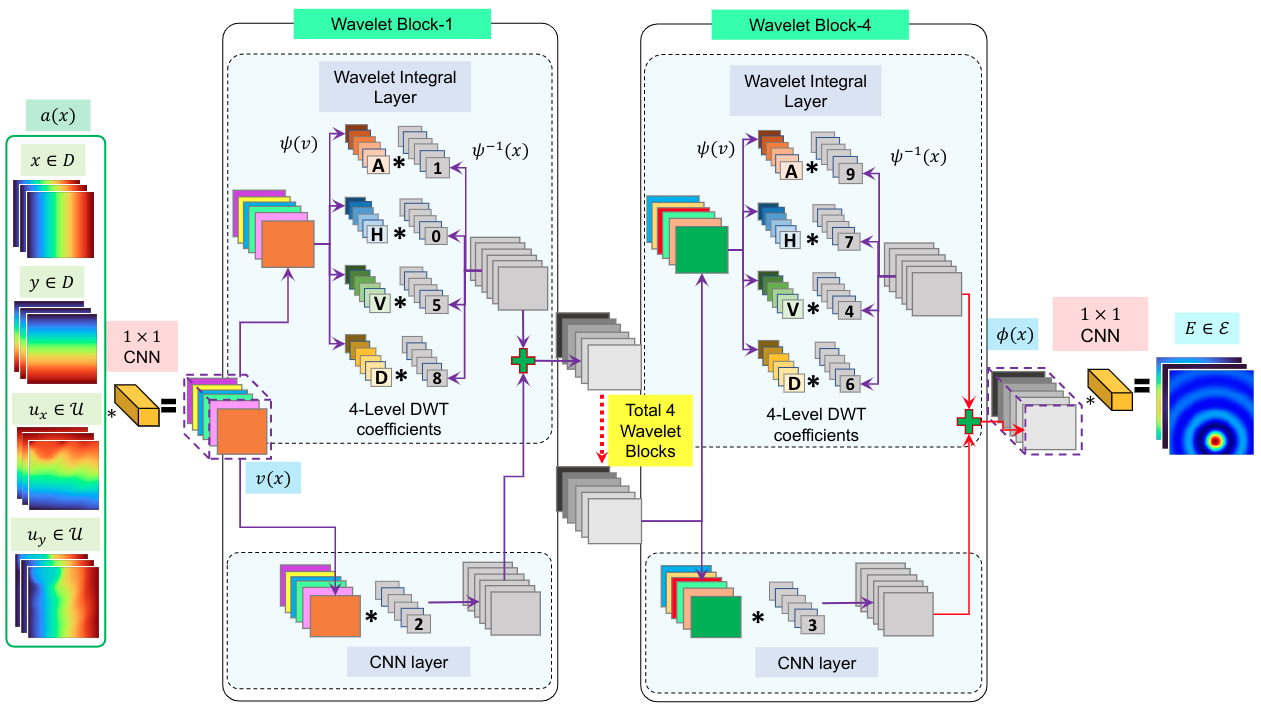
Wavelet neural operator elastography
Maps measured displacement fields to a stiffness map, to localize and quantify tumors.
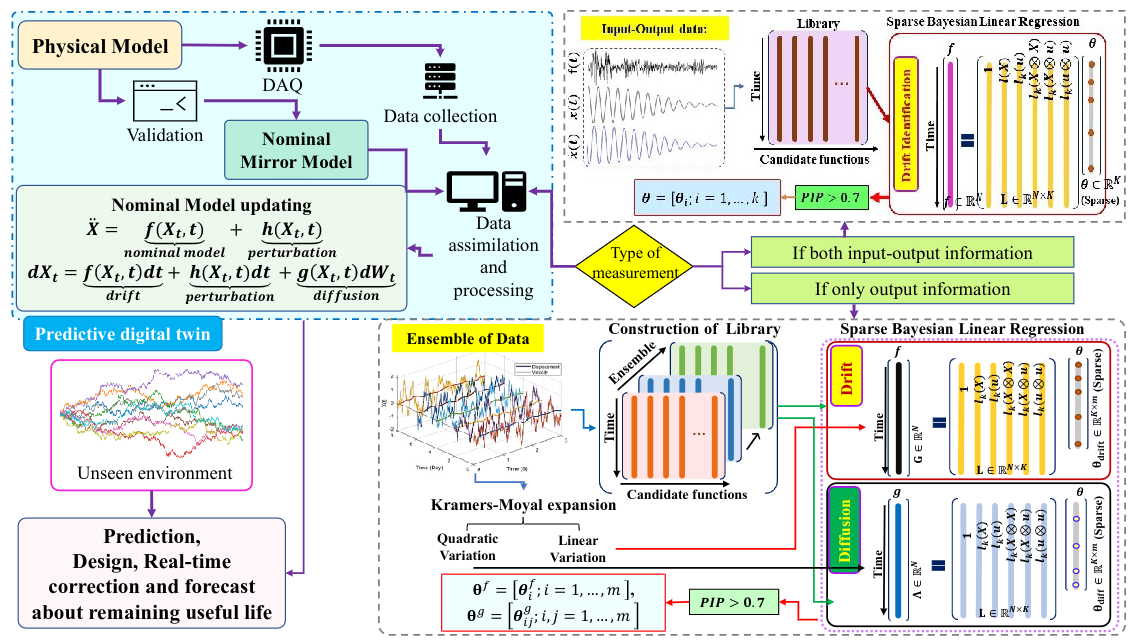
Predictive and interpretable digital twin
A probabilistic machine-learning twin that updates a nominal model from data and predicts future states.
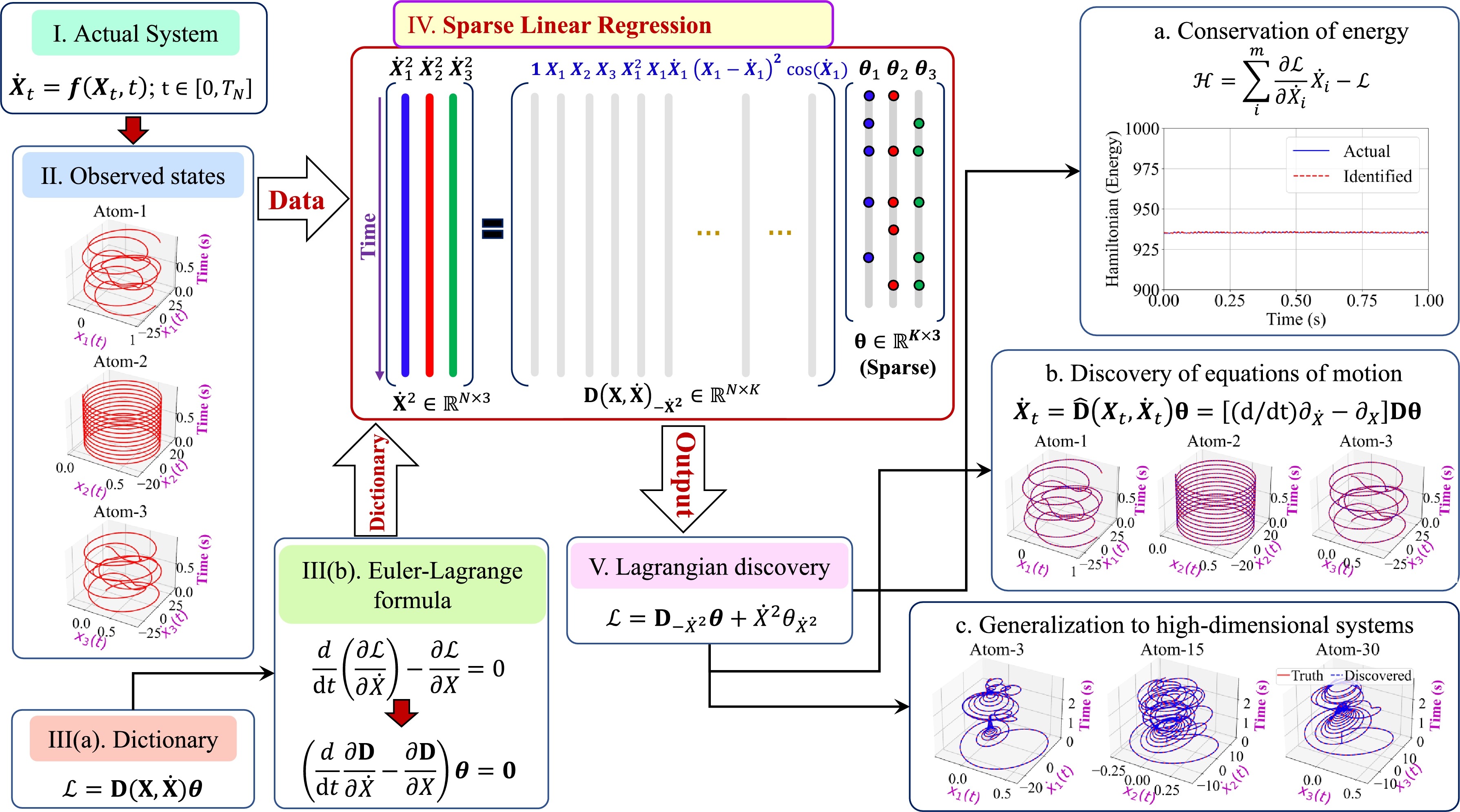
Lagrangian discovery from data
Sparse regression over an Euler–Lagrange library recovers interpretable Lagrangians and equations of motion.
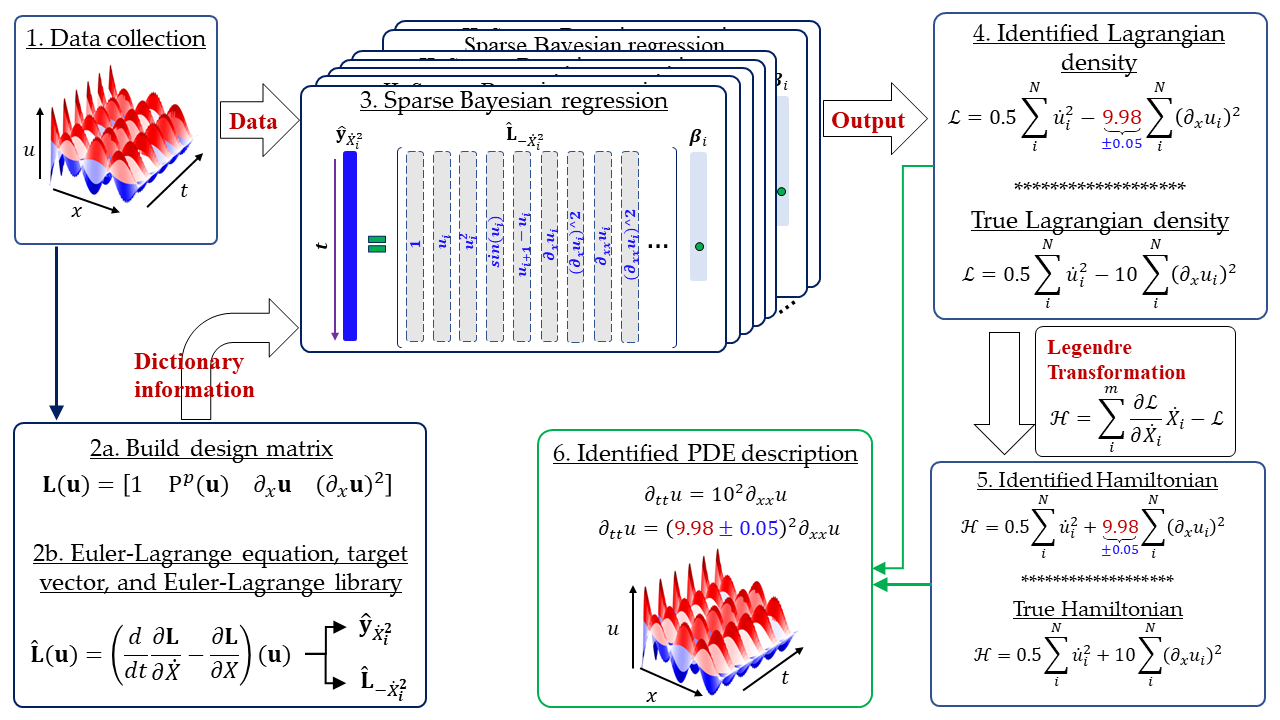
Bayesian Lagrangian discovery
A Bayesian version that discovers Lagrangian densities of PDE systems and reports uncertainty on each coefficient.
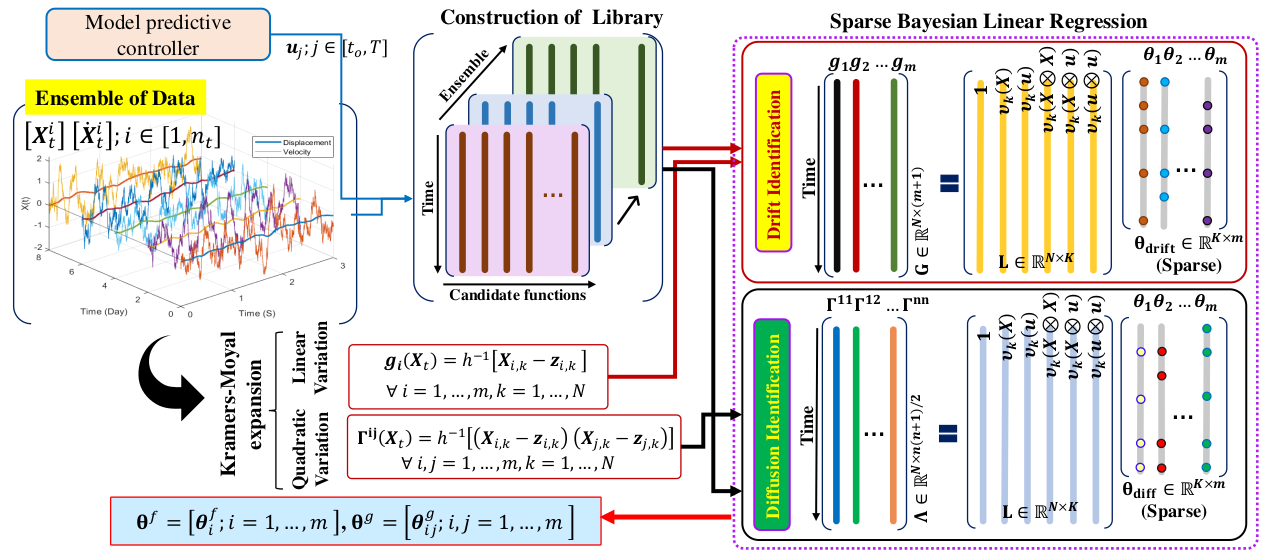
Model-agnostic predictive control (RoMAn)
Sparse Bayesian identification of drift and diffusion feeds a model predictive controller for randomly excited systems.
Featured publications
Contact
Upson Hall, Cornell University, Ithaca, NY, where I work. Open in Google Maps